Love letters from the front

Yesterday the Australian War Memorial announced a request for volunteers to assist them to transcribe thousands of love letters written between soldiers and their loved ones at home during the major conflicts.

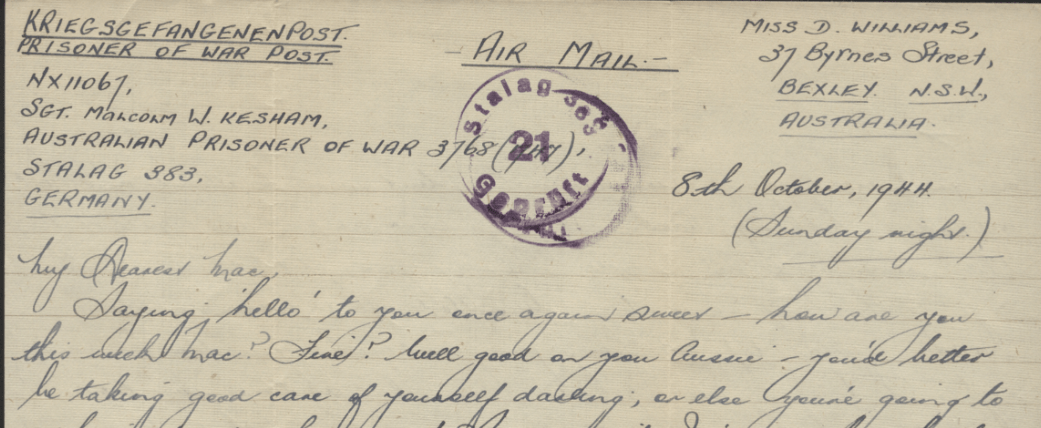
I signed up to the website and started to transcribe a letter from Dorothy Williams to her love Malcolm ‘Mac’ Keshan. The letter was addressed to Malcolm at Stalag 383, a prisoner of war camp in Germany which housed 8,000 British and Allied soldiers during World War II. It was written in March 1944. The letter spoke of her work and social life, attending theatre with friends and going to the pictures with her mum. She also reflected on the fun times she had with Malcolm before he enlisted and went to War.

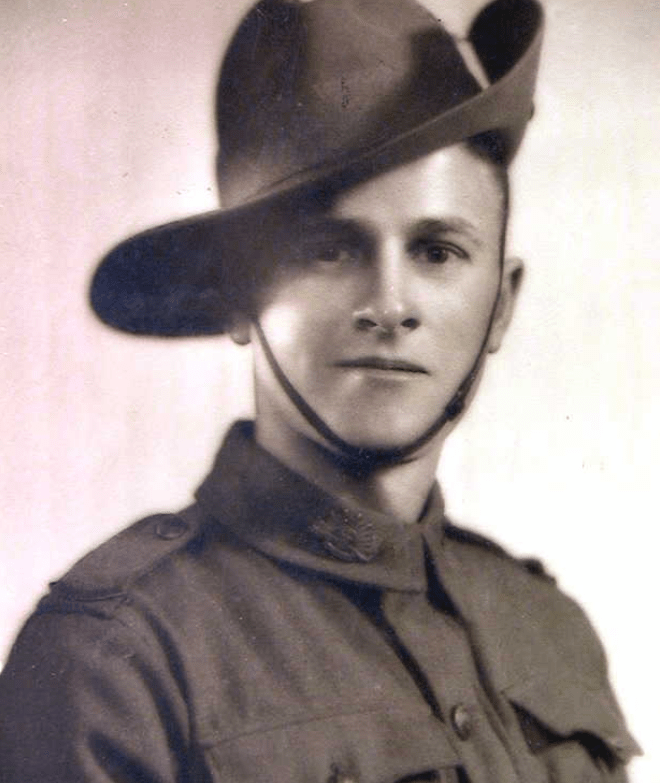
Dorothy, known as Dot, and Mac met at the Grace Building in Sydney where he was working as a lift driver. On 26 March 1940, Mac volunteered to join the Australian Imperial Force and left for overseas service.

Mac was sent to the Middle East and tasked with training men. He was transferred to the 2/4th Infantry Battalion and served in North Africa in Tobruk, Derna and Benghazi before being sent with his battalion to defend Greece. While there he was taken prisoner by the Germans. It was early 1941. He was sent to various prison camps and made two unsuccessful attempts at escape. The letter I transcribed was in October 1944 when Mac was interred at Stalag 383.

In April 1945 Mac again attempted escape from the prison camp with two other prisoners. They were successful and lucky for them ran into the advancing US army at Neustadt. They were returned to England and there for the celebrations for V Day on 8 May 1945.

Mac returned to Australia in June 1945 where he worked in dry cleaning and eventually purchased his own dry cleaning business. Mac and Dot were married on 5 October 1946. They lived in Bexley, a suburb of Sydney and had three sons. Malcolm William Keshan died on 10 May 2014 at age 94.

Mac and Dot’s letters are now in the War Memorial’s collection and are an intimate insight into the relationship and how they remained positive during the wartime. These letters were so important to the Australians fighting overseas, away from their loved ones for years, often under high stress and unsure of the outcomes. Now they will be preserved and available for future generations to appreciate their important part in history.

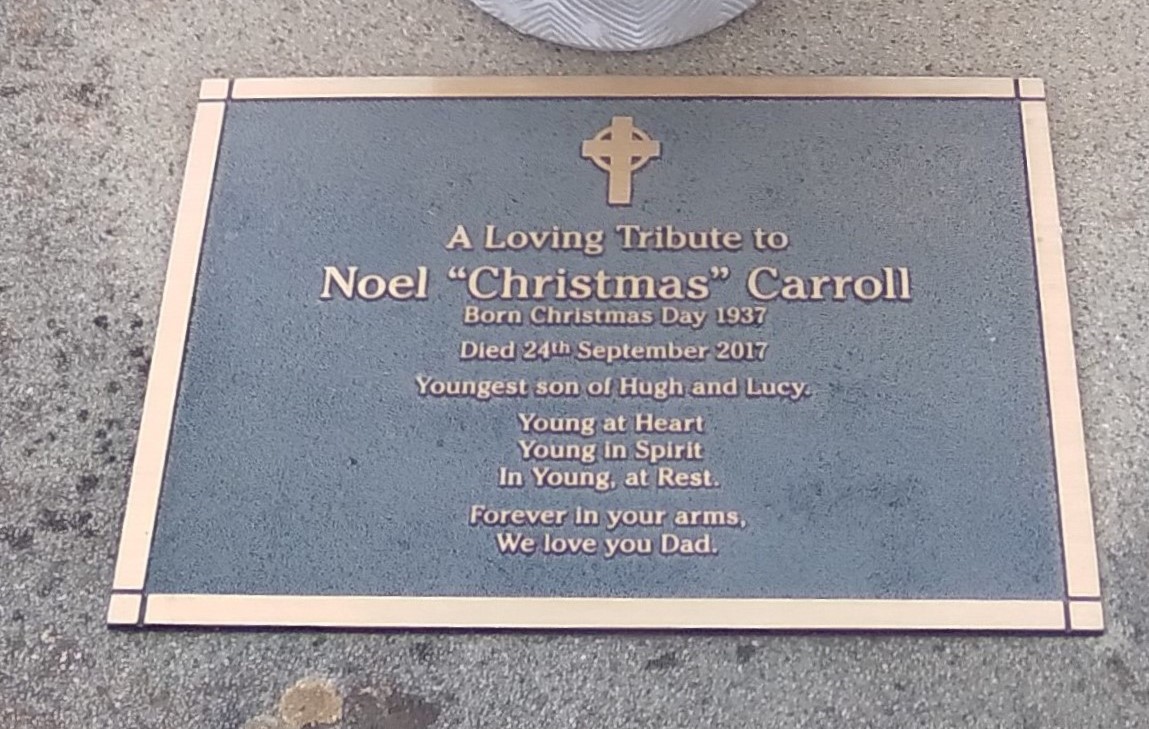
A Christmas Grave Tale – Young Cemetery

Young cemetery in south-west New South Wales contains one grave that made me look twice and a third time.

It is the grave of Noel “Christmas” Carroll born on Christmas day 1937, to Hugh and Lucy. What else would you call your son born on Christmas day when your last name is Carroll? And what other nickname would an Australian be given with the name Noel Carroll, than ‘Christmas’. A nickname he obviously embraced as evident from it being included on the plaque on his grave.

Merry Christmas Mr Carroll and to everyone else.

Christmas Conversations

Christmas is a great time to have a conversation with family members about family history. Chatting about family stories with older family members while gathered is an important element to gathering clues to help piece together an ancestor’s life.

My grandfather Frederick James Peeling was born in Shepherds Bush, London on 19 May 1908, to William Peeling and Minnie Legee. He was the second of three sons. When Minnie died in 1915, William married Gertrude Annie Moore and they had one daughter, Phyllis Peeling.

Life became difficult for Fred in the new family unit and by 1924, at age 16, Fred was working in farming, a long way from London, in South Gosforth. The lady he was working for told him about an opportunity of free passage and a job in Australia and he left on the SS Borda on 4 September 1924.

Fred’s brother William had left a year earlier, but his family didn’t know where he was and there were assumptions he had gone to America. I wrote about finding William in Pittsworth in Queensland in a previous blog.

On arrival, they assigned Fred to the Reynolds family farm Dilwyn, named after George and his wife Emily’s English home. It was in Pappinbarra, near Wauchope, on the mid-north coast of New South Wales. The climate and surroundings differed from England, with eucalyptus trees replacing green rolling hills.

George and Emily had four boys, their eldest George had died in France in 1918 while serving his country in World War 1. George snr had the mail contract between Beechwood and Pappinbarra and the farm ran dairy cows. Fred is in photos, working in long pants and long-sleeved shirts, looking happy and tanned.

In 1931, George Reynolds died, and this event brought Fred’s employment to an end. He moved to Sydney, lived in Hurstville, gained employment with NSW railways, and married my grandmother, Phyllis Whirisky, in 1935.

I was told my grandfather came to Australia, and worked on a farm near Wauchope in a small place called Pattinburra with a family named Reynolds. I couldn’t find a place called Pattinburra but found Pappinbarra by scouting places on the map close to Wauchope and I found details of the Reynolds family from there.

The story developed using births, deaths and marriages indexed in Australia and England, newspapers on Trove, Electoral rolls and emigration records on Ancestry, military records on the National Archives of Australia.

My family believed for along time Fred arrived in Australia under the Dreadnought agricultural labourers’ immigration scheme. Records of the boys who arrived under the scheme are available at several libraries and I viewed the microfilm at the State Library of Queensland. The list of immigrants did not include Fred Peeling and I confirmed this on a visit to the Alstonville, which holds the records collected by the Dreadnought Association. If you have a Dreadnought boy in the family I recommend contacting the Alstonville museum to see what they know of your ancestor. They are very helpful.

Have a wonderful Christmas with your family and don’t forget to ask about those family stories.