Transported to Norfolk Island

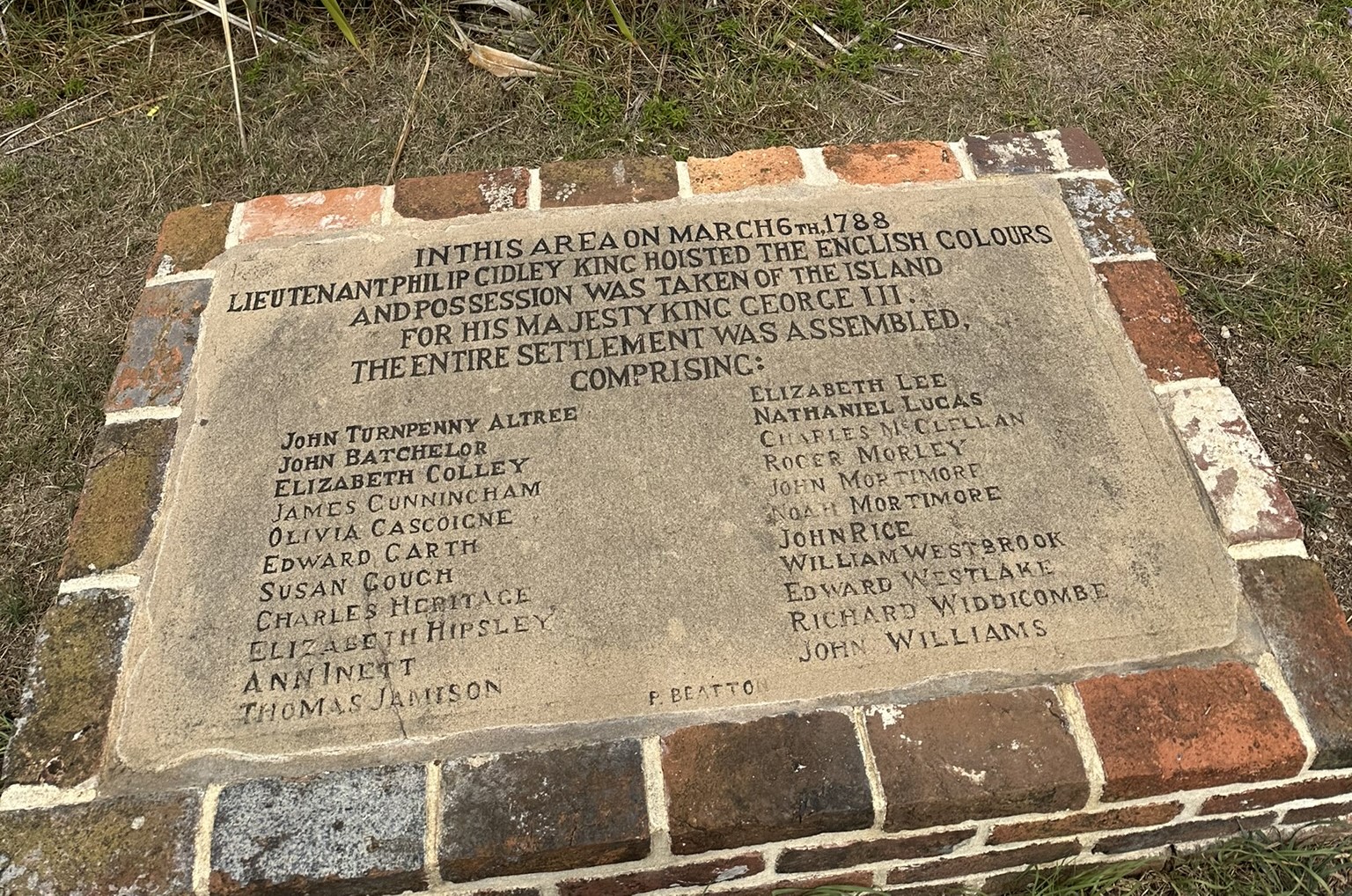
On 6 March 1788, my 5x great-grandparents Edward Garth and Susannah Gough, stepped ashore on Norfolk Island with Lieutenant Governor Philip Gidley King and 22 others with the purpose of farming and providing food for the new colony in Sydney Cove.

Edward and Susannah were convicts transported on the First Fleet to Sydney Cove. After the landing on 26 January 1788, they were selected to again board a ship and travel to Norfolk Island. They married and had seven children on Norfolk before the government made a decision to close the settlement. Edward and Susannah and their family were evacuated in 1807 and given land grants in Tasmania.

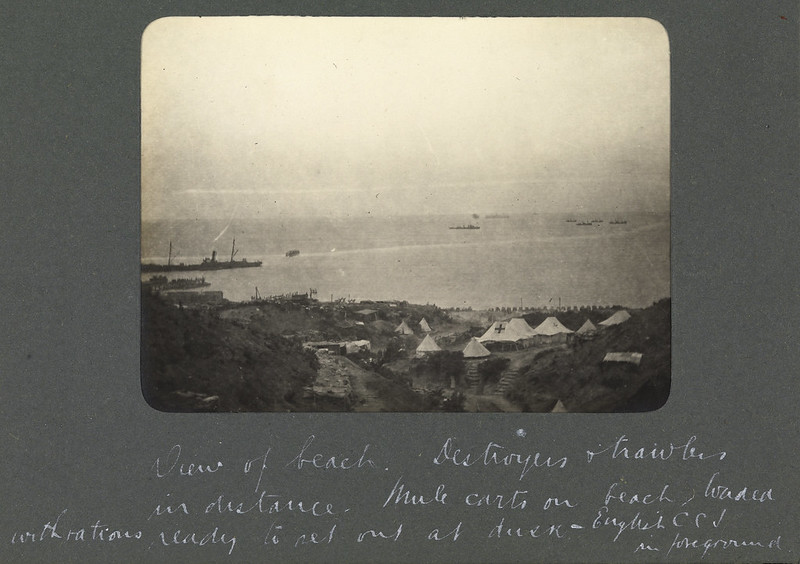
Another of my 5x great-grandparents, Jacob Bellett, was also transported on the First Fleet and sent to Norfolk Island in March 1790. He arrived on Norfolk Island on the Supply. The Supply had sailed from Sydney Cove with the HMS Sirius, flagship of the First Fleet, to gather stores from Norfolk and other ports to save the starving colony in Sydney Cove. As the Sirius approached to complete unloading, the wind shifted and she struck the reef and sunk. This was a devastating sight for the colonists of Norfolk Island.

Jacob Bellett married Ann Harper on Norfolk Island on 15 November 1791. Ann Harper was transported on the Second Fleet. They had nine children and were evacuated to Tasmania leaving behind a substantial farm and a two-storey home. The families must have known each other well on the island as, after their arrival in Hobart, three children from the Garth family married three from the Bellett family – James Garth married Mary Bellett in 1815, Edward Garth married Ann Bellett in 1816, and John Bellett married Susannah Garth in 1822. These marriages created a strong bond between the two families and a unique family history.

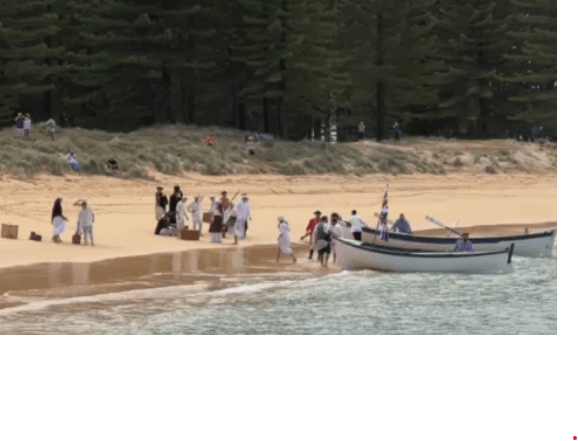
Every year on 6 March, Foundation day is celebrated on the island, commemorating the anniversary of the landing of the small group of First Fleeters. The community creates a wonderful day of re-enacting and celebrating the early pioneers. Their life and achievements are preserved in many of the museums on the island.

Next year in October we will gather as a family in Hobart to celebrate the strength and resilience of our ancestors and share stories of their descendants. Thousands have descended from the Garth and Bellette families and we hope many will attend. If you are related and would like more information about the reunion, email hobartoct2025@gmail.com for details.

George McCarthy the Labor man

George McCarthy is the brother of my great-grandmother Clarinda. I knew nothing about him until my family research unravelled his story. George was a publican, a Labor man and a fighter for worker’s rights.

George was born in Dubbo in 1885, though his family had no connections there. His father John was nomadic and I wrote about his wanderings in a previous blog post. When John married Eliza Fox in Young, New South Wales in 1877, her mother didn’t approve of the marriage, and the family moved from the town to Dubbo, then Peak Hill.

George’s mother Eliza died from liver cancer at age 35 in 1895. George was ten and him and his five siblings were sent back to Young to grow up with his mother’s family. Their father John McCarthy was not seen by the children again.

When old enough to work, George, with his cousin William Harris, became a shearer in a group known as the ‘bike rider shearers’ who rode around New South Wales from property to property. They rode across the state, following the shearing sheds until George met eighteen-year-old Violet Kelly at Burrowa, a town south-east of Young. Her parents owned a local hotel.

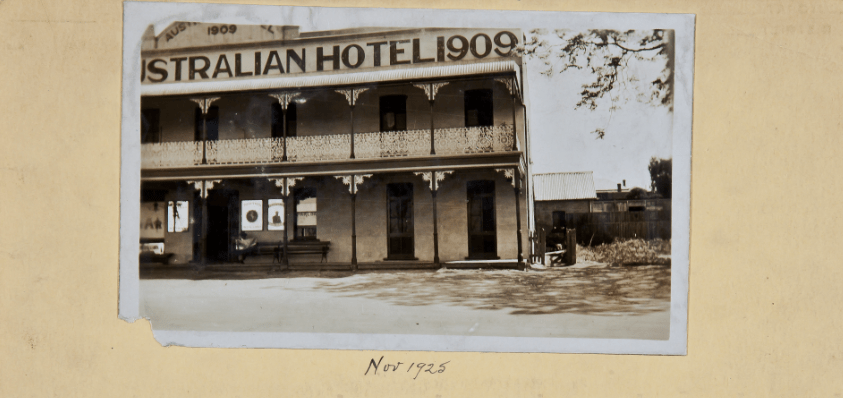
George and Violet were married in 1908 and moved to Cowra where George operated the Australian Hotel and was involved in local politics as a member of the Labor party. His first election attempt was the council election in March 1927 where he ran second to a local doctor. Later the same year he was in trouble with the law for keeping bars open after licensed hours at the hotel. In 1928, George was the Labor candidate for the State elections however he was also defeated.

In the 1930s, George moved his family to Sydney and started work with The Postmaster-General’s Department (PMG) as a PMG linesman. The PMG was established at the time of Federation in 1901 and was responsible for postal and telephone services across Australia. In 1932, George used his political experience and assisted with the PMG Linesman’s wage claim in the High Court in Melbourne. He argued and won the case against his opposing Queen’s Council.

By the 1940’s he was inspector of Post Office buildings and worked from an office at the Trades Hall in Pyrmont. In the 1950’s George was the organiser for the Postal Workers Union.

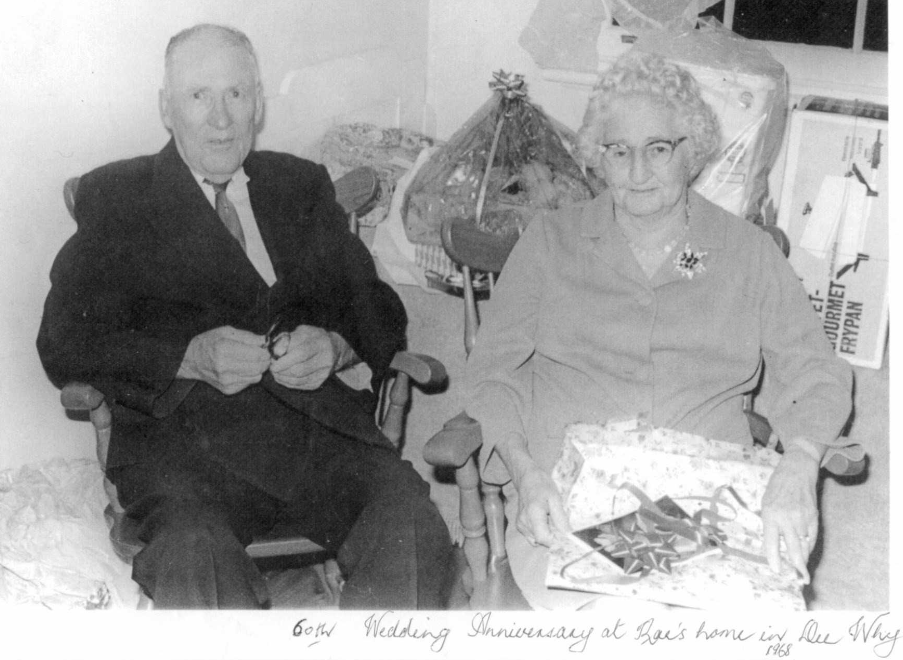
The family gathered for their 60th wedding anniversary in Sydney in 1968. There is evidence throughout his life that he remained in contact with his cousins in Young, the only one of his siblings to do so. George passed away in 1974 and is buried in Mona Vale Cemetery with Violet who passed away two years later.

Grave tales – Alstonville

Alstonville is a lovely town on the way to Lismore from Ballina on the northern rivers area of New South Wales. As with most towns along the north coast, the settlers were attracted by the plentiful supply of red cedar, a sought after timber for the colony and the export industry.

Land was selected in 1865 and the town grew due to the needs of the expanding population. The cemetery was opened around 1890 and it is on a hill across the current highway from the turnoff to the town. It is a quiet, peaceful setting of well cared for gardens and tropical plants and is still used for burials today.

A large black marble monument stands in the Roman Catholic section as a tribute to the O’Connell family. It no longer has the ironwork fence but the marble is in good condition and a tribute to Michael O’Connell, his wife Mary and their son Thomas. Michael and Mary were natives of County Meath, Ireland.

Michael and Mary made the journey to Australia as unassisted immigrants, paying for the full cost of their passage. They departed Plymouth, England aboard the ship ‘Hotspur’, arriving in Sydney on 5 Dec 1863 with 440 other passengers. They first settled at Jamberoo on the south coast of New South Wales where Michael was a farmer. Their first four children were born there.


In about 1870, the family sailed to Ballina and relocated to Duck Mountain, the name given to the area now known as Alstonville. Here they had a further six children. Along with other settlers, the O’Connell family engaged in the dairy industry on the fertile rolling hills. Michael also planted sugar cane. Many small mills operated in the district before larger steam mills were constructed in 1882. By 1896 the Rous Mill boasted a light rail line to transport cane to Alstonville.

Three years prior to the death of Michael in 1908 at age 67, their eldest son Thomas died from consumption, also known as tuberculosis, at age 39. He left a wife and five children, the youngest six months old. It is said in his obituary that Michael never recovered from his son’s death. His funeral was conducted in the Roman Catholic chapel in Alstonville, officiated by the Rev. Father Williams. His coffin was then taken to the cemetery with a very large procession of friends and family following. Father Williams read the funeral service at his graveside and spoke of his impressive life and character and how he, and his sons, had assisted in clearing the land for the church in Alstonville.

Michael was buried alongside his son Thomas. His wife Mary passed away on 26 September 1925 and was buried with her husband and son.