Featured

Lest we forget

William Sydney McCarthy was born in Peak Hill, New South Wales on 13 February 1891. William’s mother died when he was four and his father deserted the family. After his mother’s death, William and his siblings returned to Young to live with his mother’s family. The seven McCarthy children were separated to grow up with family members. When aged ten, William lived for a few years at the Presbytery with the Very Reverend Father Hennessy and attended the local convent school. After his school years he became a shearer, travelling throughout western New South Wales gaining contract work.

On 24 November 1914, three days before his cousin Thomas Debnam, William enlisted with the army at Liverpool and was assigned to the 1st Battalion of the Australian Infantry Force. William was 23 years old, 5ft 6in tall, fair complexion, brown eyes and brown hair. He was of Roman Catholic religion. He embarked on HMAT Seang Choon, the same ship as Thomas. William was involved in the landing at Gallipoli and was in a boat next to his cousin Fred Prothero. Fred saw his exit from the boat during the landing and didn’t see him again. William was covering the line with his battalion on 2 May 1915 and was killed by Turkish fire. He was reported as missing by his commanding officer and the family were advised of his missing status.

William McCarthy was featured with his cousin Thomas Debnam in an article in the Sydney Morning Herald of 23 August 1915. The article was headlined ‘Men of the Dardanelles’. Twenty photos display the faces of lives lost or injured in the Gallipoli campaign. It included their names and places of birth.

A day after the story in the Sydney Morning Herald on 24 August 1915, The Young Chronicle published a story headlined ‘Three Cousins. Two Dead, One Wounded.’  The story was about the service of Fred Prothero, Thomas Debnam and William McCarthy and the death of the cousins in the early weeks of the campaign. It detailed how proud Young was of the gallant young men. The story stated William’s brother, George McCarthy, received a message from a battalion mate of William’s. The message included a letter William had been writing home, taken from his tunic pocket after his death. This message confirmed for the family that William was not missing but deceased.

William McCarthy was not declared officially dead until 11 January 1916 after a court of enquiry held at Tel-el-Kebir in Egypt made the official determination of his death.


William is remembered at the Lone Pine Memorial, Gallipoli Peninsula, the Australian War Memorial, the memorial in the foyer of Young Council Chambers and on his mother’s headstone in Peak Hill Cemetery. On this Anzac day, we will remember them.

Featured

George McCarthy the Labor man

George McCarthy is the brother of my great-grandmother Clarinda. I knew nothing about him until my family research unravelled his story. George was a publican, a Labor man and a fighter for worker’s rights.

George was born in Dubbo in 1885, though his family had no connections there. His father John was nomadic and I wrote about his wanderings in a previous blog post. When John married Eliza Fox in Young, New South Wales in 1877, her mother didn’t approve of the marriage, and the family moved from the town to Dubbo, then Peak Hill.

George’s mother Eliza died from liver cancer at age 35 in 1895. George was ten and him and his five siblings were sent back to Young to grow up with his mother’s family. Their father John McCarthy was not seen by the children again.

When old enough to work, George, with his cousin William Harris, became a shearer in a group known as the ‘bike rider shearers’ who rode around New South Wales from property to property. They rode across the state, following the shearing sheds until George met eighteen-year-old Violet Kelly at Burrowa, a town south-east of Young. Her parents owned a local hotel.

George and Violet were married in 1908 and moved to Cowra where George operated the Australian Hotel and was involved in local politics as a member of the Labor party. His first election attempt was the council election in March 1927 where he ran second to a local doctor. Later the same year he was in trouble with the law for keeping bars open after licensed hours at the hotel. In 1928, George was the Labor candidate for the State elections however he was also defeated.

In the 1930s, George moved his family to Sydney and started work with The Postmaster-General’s Department (PMG) as a PMG linesman. The PMG was established at the time of Federation in 1901 and was responsible for postal and telephone services across Australia. In 1932, George used his political experience and assisted with the PMG Linesman’s wage claim in the High Court in Melbourne. He argued and won the case against his opposing Queen’s Council.

By the 1940’s he was inspector of Post Office buildings and worked from an office at the Trades Hall in Pyrmont. In the 1950’s George was the organiser for the Postal Workers Union.

The family gathered for their 60th wedding anniversary in Sydney in 1968. There is evidence throughout his life that he remained in contact with his cousins in Young, the only one of his siblings to do so. George passed away in 1974 and is buried in Mona Vale Cemetery with Violet who passed away two years later.

Featured

Grave tales – Alstonville

Alstonville is a lovely town on the way to Lismore from Ballina on the northern rivers area of New South Wales. As with most towns along the north coast, the settlers were attracted by the plentiful supply of red cedar, a sought after timber for the colony and the export industry.

Land was selected in 1865 and the town grew due to the needs of the expanding population. The cemetery was opened around 1890 and it is on a hill across the current highway from the turnoff to the town. It is a quiet, peaceful setting of well cared for gardens and tropical plants and is still used for burials today.

A large black marble monument stands in the Roman Catholic section as a tribute to the O’Connell family. It no longer has the ironwork fence but the marble is in good condition and a tribute to Michael O’Connell, his wife Mary and their son Thomas. Michael and Mary were natives of County Meath, Ireland.

Michael and Mary made the journey to Australia as unassisted immigrants, paying for the full cost of their passage. They departed Plymouth, England aboard the ship ‘Hotspur’, arriving in Sydney on 5 Dec 1863 with 440 other passengers. They first settled at Jamberoo on the south coast of New South Wales where Michael was a farmer. Their first four children were born there.


In about 1870, the family sailed to Ballina and relocated to Duck Mountain, the name given to the area now known as Alstonville. Here they had a further six children. Along with other settlers, the O’Connell family engaged in the dairy industry on the fertile rolling hills. Michael also planted sugar cane. Many small mills operated in the district before larger steam mills were constructed in 1882. By 1896 the Rous Mill boasted a light rail line to transport cane to Alstonville.

Three years prior to the death of Michael in 1908 at age 67, their eldest son Thomas died from consumption, also known as tuberculosis, at age 39. He left a wife and five children, the youngest six months old. It is said in his obituary that Michael never recovered from his son’s death. His funeral was conducted in the Roman Catholic chapel in Alstonville, officiated by the Rev. Father Williams. His coffin was then taken to the cemetery with a very large procession of friends and family following. Father Williams read the funeral service at his graveside and spoke of his impressive life and character and how he, and his sons, had assisted in clearing the land for the church in Alstonville.

Michael was buried alongside his son Thomas. His wife Mary passed away on 26 September 1925 and was buried with her husband and son.

Featured

Love letters from the front

Yesterday the Australian War Memorial announced a request for volunteers to assist them to transcribe thousands of love letters written between soldiers and their loved ones at home during the major conflicts.

I signed up to the website and started to transcribe a letter from Dorothy Williams to her love Malcolm ‘Mac’ Keshan. The letter was addressed to Malcolm at Stalag 383, a prisoner of war camp in Germany which housed 8,000 British and Allied soldiers during World War II. It was written in March 1944. The letter spoke of her work and social life, attending theatre with friends and going to the pictures with her mum. She also reflected on the fun times she had with Malcolm before he enlisted and went to War.

Dorothy, known as Dot, and Mac met at the Grace Building in Sydney where he was working as a lift driver. On 26 March 1940, Mac volunteered to join the Australian Imperial Force and left for overseas service.

Mac was sent to the Middle East and tasked with training men. He was transferred to the 2/4th Infantry Battalion and served in North Africa in Tobruk, Derna and Benghazi before being sent with his battalion to defend Greece. While there he was taken prisoner by the Germans. It was early 1941. He was sent to various prison camps and made two unsuccessful attempts at escape. The letter I transcribed was in October 1944 when Mac was interred at Stalag 383.

In April 1945 Mac again attempted escape from the prison camp with two other prisoners. They were successful and lucky for them ran into the advancing US army at Neustadt. They were returned to England and there for the celebrations for V Day on 8 May 1945.

Mac returned to Australia in June 1945 where he worked in dry cleaning and eventually purchased his own dry cleaning business. Mac and Dot were married on 5 October 1946. They lived in Bexley, a suburb of Sydney and had three sons. Malcolm William Keshan died on 10 May 2014 at age 94.

Mac and Dot’s letters are now in the War Memorial’s collection and are an intimate insight into the relationship and how they remained positive during the wartime. These letters were so important to the Australians fighting overseas, away from their loved ones for years, often under high stress and unsure of the outcomes. Now they will be preserved and available for future generations to appreciate their important part in history.

The Tragic Death of Dixie Downing

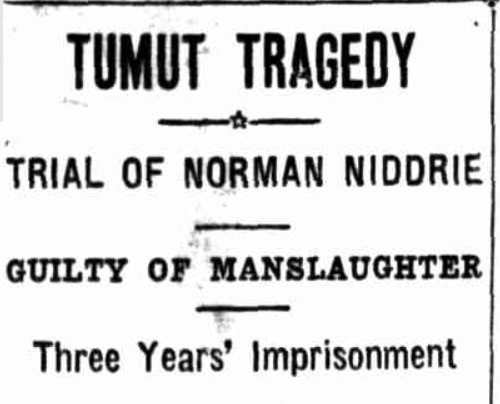
Newspaper archives can uncover many aspects of a person’s life, but they can also uncover stories that are a surprise and even national news. Norman Niddrie married into the family in the 1940s, but it was his earlier life that was splashed across the news.

On the night of 28 January 1939, the small town of Tumut, New South Wales, was shaken by a violent incident resulting in the death of Michael Joseph “Dixie” Downing, a well-known local figure. Earlier in the evening, Downing was seen around town, including at the Woolpack Hotel. Witnesses last saw him alive around 10.20pm at the Excelsior Cafe. Around 10.50pm, William Thomas, owner of a nearby fruit shop, heard a commotion behind his store. When he walked out to investigate, Thomas found Norman Niddrie attempting to lift an injured Downing. Sergeant Nightingale was called to the scene, where Downing, barely conscious, stated someone had hit him but couldn’t identify his attacker. Dixie was taken to Tumut hospital and died from his injuries the next morning.

As the investigation unfolded, conflicting accounts emerged. Niddrie initially claimed he had found Downing injured and tried to help. However, under further questioning, he changed his story, admitting to an altercation with Downing. According to Niddrie’s second statement, Downing had attempted to pickpocket him. In response, Niddrie pushed Downing, causing him to fall against an iron fence. Niddrie maintained that he had no intention to seriously harm Downing and tried to help him afterward.

Dr. John Wharton Mason, who examined Downing, found extensive injuries including fractured jaws, bruising on the skull, arms, and chest, and a ruptured lung. Dr. Mason testified at the inquest that the injuries were consistent with multiple kicks and were too severe to have been caused by a simple fall.

The case went to trial at the Central Criminal Court in Sydney on 17 March, 1939. Norman Niddrie, aged 24 at the time, was charged with murder. He pleaded not guilty. In the opening statement, the Crown Prosecutor presented the events of the night, including Niddrie’s drinking at the Woolpack Hotel and the subsequent encounter with Downing in a back street near the hotel.

A key piece of evidence was Niddrie’s statement to the police: “Dowling went to put his hands in my pockets, and I swung hard, knocking him against an iron fence. I had no intention of hurting him.” This statement aligned with Niddrie’s earlier claim of self-defense against an attempted pickpocketing.

After the case concluded, the jury considered the evidence and returned a verdict of manslaughter, rather than murder. Mr. Justice Maxwell, presiding over the case, sentenced Norman Niddrie to three years imprisonment for the manslaughter of Michael Joseph Dowling.

Unravelling truth from lies

August is Family History Month and it is a great time to get back into researching a branch of the family tree or taking a free course from the thousands available. I am at the end of the process of unravelling truths and non-truths left in a trail of documents by my 3x great-grandmother. She did a great job of erasing her daughter Eliza and Eliza’s father from her life. It worked so well that the majority of online family trees, the local historical society and even her descendants believed her.

If you believe the obituary and death certificate for Margaret Wogan, who died in Young, New South Wales, in 1924, you would think that Margaret:

  • came to Australia in 1850 from County Meath, Ireland with her parents at age 14
  • married Hugh Henry in Bathurst and raised four children
  • arrived in Young in 1861 with Hugh and her four children, Christopher and Mary Ann, Catherine and Margaret
  • married Martin Gill and had three children, Bridget, Julia and Martin.

I had started looking for the parents of my 2x great-grandmother, Eliza Fox. Her birth certificate told me she was born in Hovells Creek in 1860 to Margaret Wogan and William Fox and they had married in Tumut in 1858. But Eliza was missing from the obituary and death certificate of Margaret and there was no mention of William Fox. Bridget, who was attributed to Martin Gill in the obituary was also the daughter of William Fox, born in Young in 1861. Bridget used the surname ‘Henry’ on her marriage and children’s birth certificates. Hugh Henry didn’t know of the existence of Bridget, he was still in Bathurst.

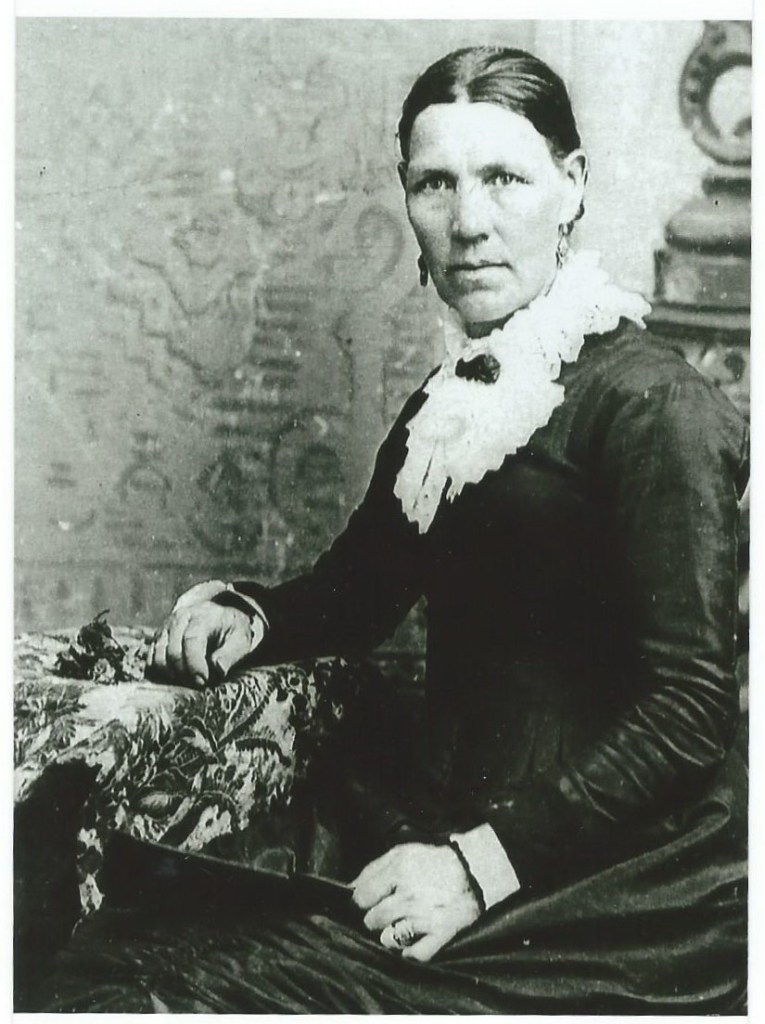
Photo: Margaret Wogan circa 1880

Unravelling the discrepancies and mysteries involved using online records, newspapers articles, obtaining all certificates of her children and her relationships, as well as digging in the archives of the family history society. Assembling a timeline helped to analyse what was fact and what information could be discarded.

Once finished, the research was used to build a timeline and the truth emerged. The truth about Margaret was she:

  • left Ireland at age 14 as an orphan as part of the Earl Grey Orphan Immigration Scheme. Her parents were not alive.
  • married Hugh Henry at Bathurst aged 16 and had four children: Christopher, Catherine, Mary Ann and Margaret.
  • left Hugh in Bathurst some time in 1859 and met William Fox in Hovells Creek
  • gave birth to Eliza in 1860 at Hovells Creek, William Fox registered the birth. Hugh Henry died in Bathurst later the same year.
  • arrived with William at the gold fields near Young with five children. She was five months pregnant with Bridget, born in 1861 in Young. William Fox registered Bridget’s birth.
  • gave birth to Julia Gill in 1865, the father noted as Martin Gill stating she married him in Bathurst.
  • appeared in court in 1865 in a dispute with a neighbour. She appeared as Margaret Henry, not Margaret Gill, despite stating she had married Martin in Bathurst.
  • married Martin Gill in 1866 in the Congregational Church. He gave his name as Francis Gill, never having used that name before, but perhaps to distinguish from the name given in Julia’s birth registration.
  • gave birth to her eighth child, Martin in 1870
  • re-married Martin Gill in 1873 in the Catholic church.

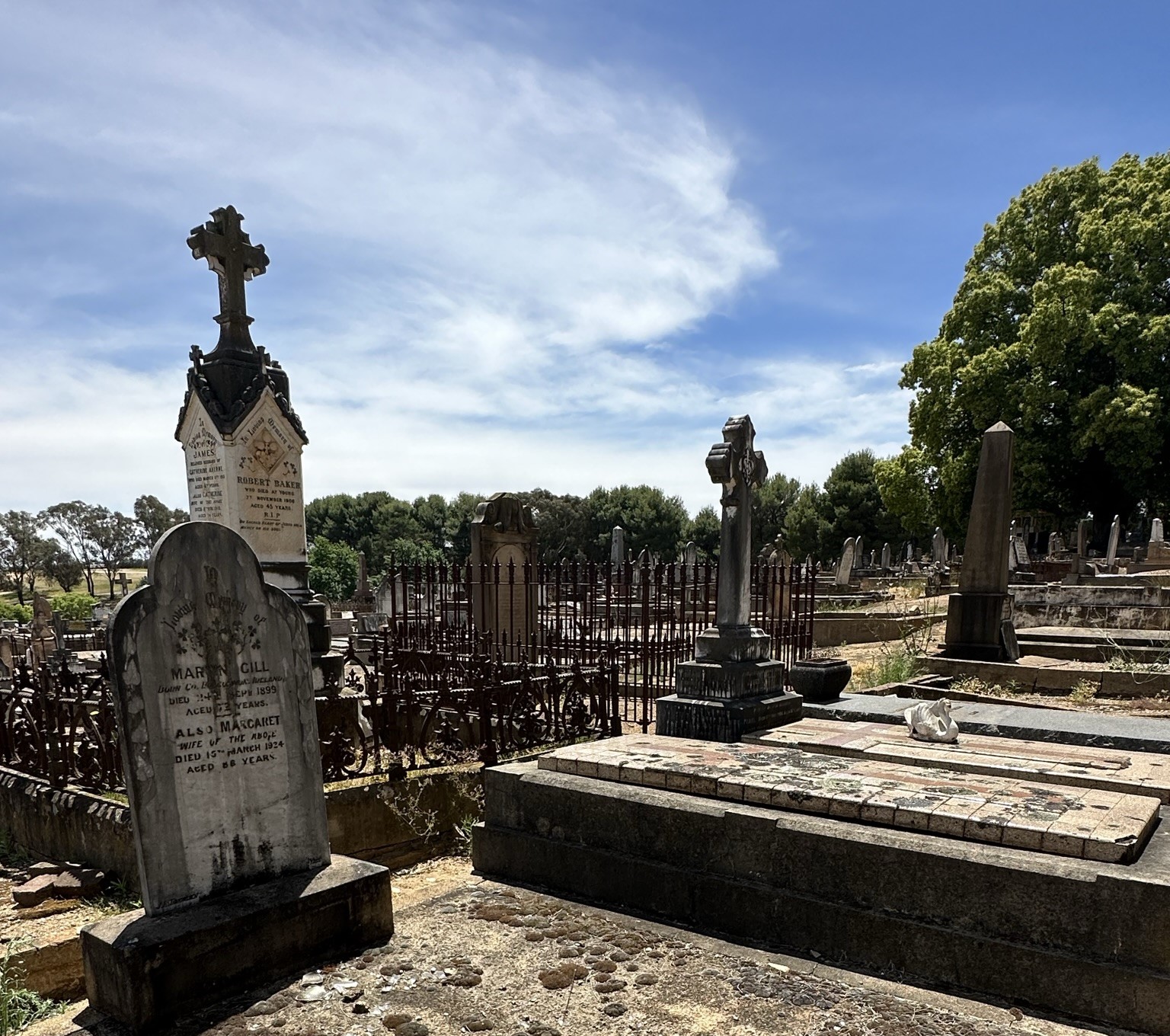
I can understand why Margaret didn’t tell the truth on official records. She was an Irish Catholic orphan who had committed adultery and given birth to three illegitimate children, not the actions of what was considered respectable in colonial Australia. Eliza Fox used the Fox name throughout her life and married an older man that Margaret didn’t like. Perhaps these are the reasons Eliza was erased. Despite the path she took Margaret successfully manipulated the facts, returned to the Catholic Church and, after her death, was remembered as ‘a grand old pioneer and a lady widely known and respected.’