
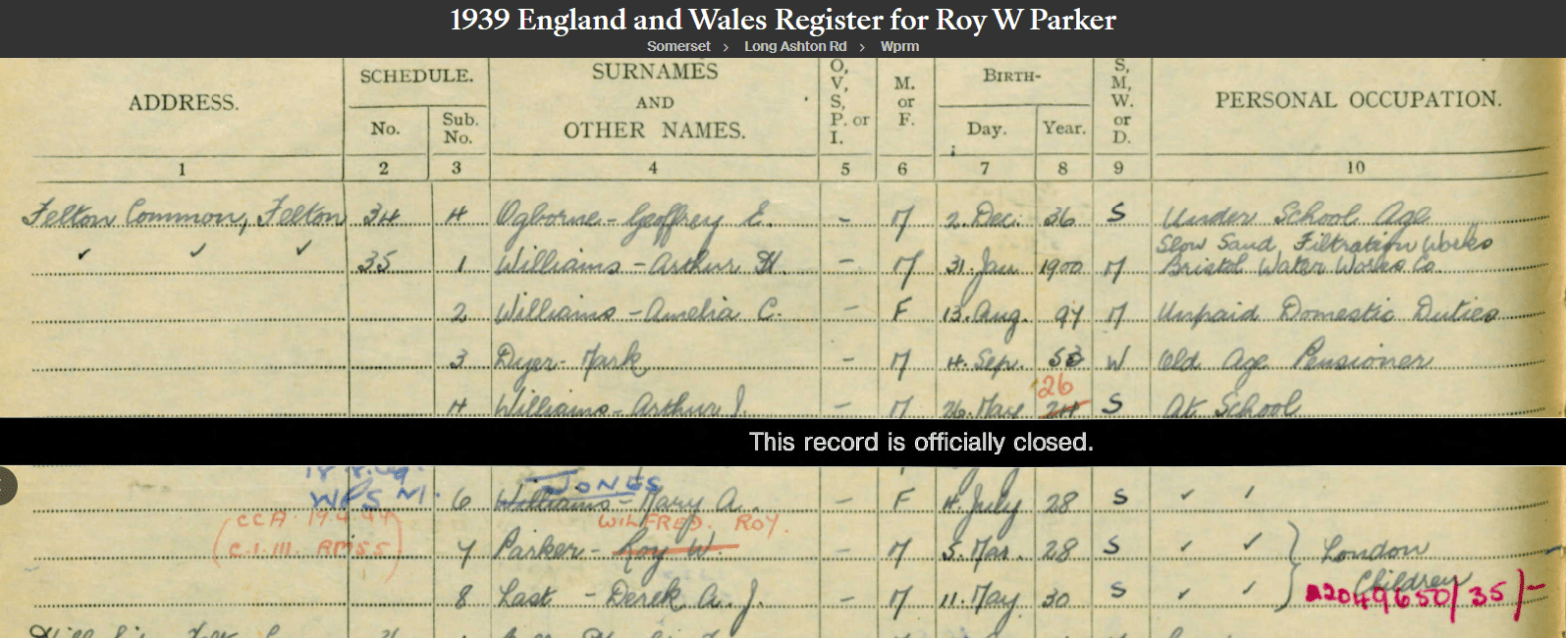
There is often confusion about the English 1939 register and whether it is a regular census. The 1939 register is not a census, but a register collated in September, just after the start of World War Two. It is not covered by the Census Act 1920, so not subject to the 100 year closure rule which is why we already have access to it.
The register is a snapshot of England on the eve of war. Children had been evacuated, but conscription hadn’t started. It is the only listing of the population between 1921 and 1951. The 1941census did not go ahead due to war and the 1931 census was destroyed by fire in 1942. The records are contained in 7000 volumes.
The big difference between the register and a census is the purpose. The census is a big market research study of the population. There are no relationships or birthplaces on the 1939 register, but it has full dates of birth which are not found in the census.
The register was needed to get everyone listed at a point in time so they could get a National Identity card and a ration book. It was used to direct labour and monitor and control the movement of the population caused by evacuation. In later years of the war it was used for conscription.
The form was left with every household on registration night and then collected a few days later. Despite taking a full register of the population in 1939, the government still intended to go ahead with the 1941 census and used many of the enumerators employed to complete the census and employed many more than was required for a census. Districts were smaller so extra enumerators could get around easier and complete the process in a shorter timeframe.
The picture above shows the record for Wilfred Roy Parker aged eleven. He is from Essex and has been evacuated to Somerset to live with a family and three other boys his age. A record on the page is redacted with a thick black line. The record of anyone born less than 100 years ago is closed unless they are known to have died. Records can be opened on request however a volume number is needed. This can be difficult if they are not living with known family and almost impossible to find someone across 7000 volumes if they had been evacuated or living in a different area away from family.
Another benefit of the register is they were annotated for 60 years after the register was taken. Annotations were made on the register for a change of name which could be due to marriage or the correction of an error. Some notations also included a date which was the date the change was notified. The notation is often in red which makes it easier to spot.
It must have been a scary experience for the children of England to leave their parents and be sent to the country with strangers. There are still some people I haven’t found on the register because of redaction. Redactions are being removed regularly so I suggest you keep going back and doing another check. You never know when someone will appear.
 Trace Genealogy